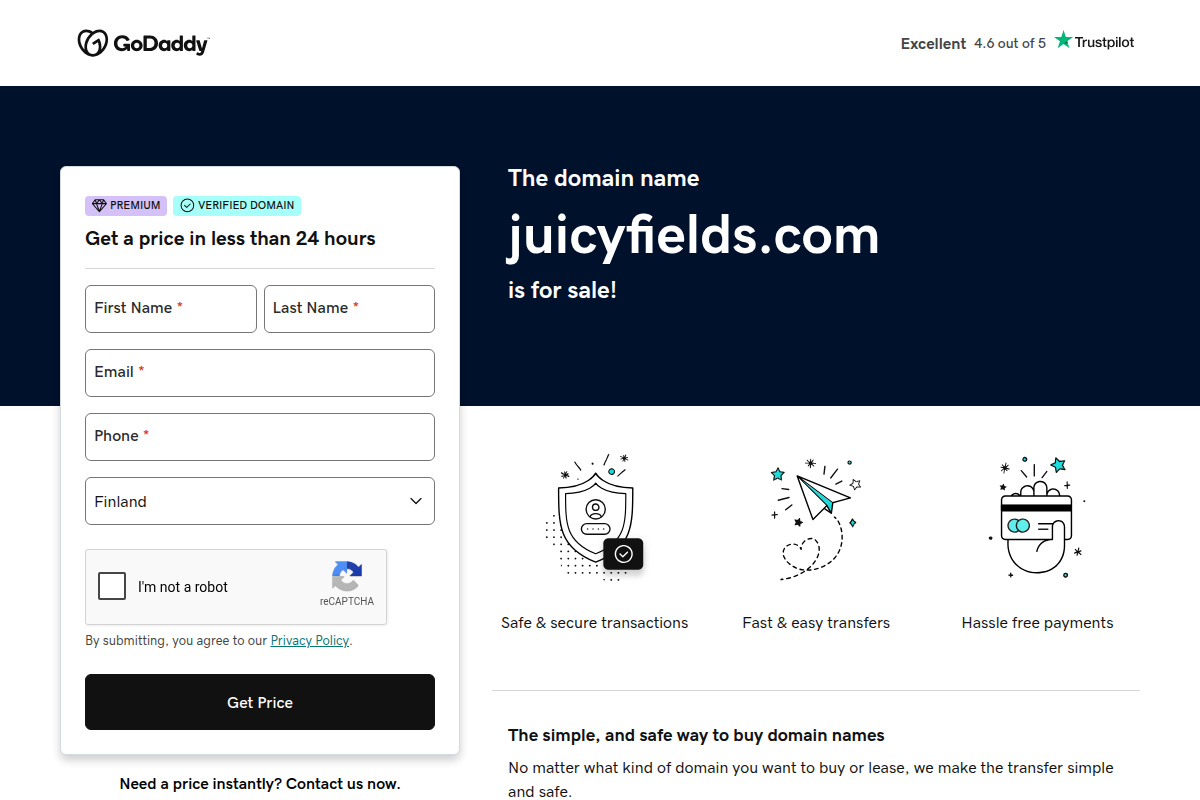
The Rise and Fall of JuicyFields: A Comprehensive Forensic Analysis
The digital investment landscape has seen a surge in “alternative asset” platforms, but few have captured the public imagination—and eventual scrutiny—quite like Juicyfields.com. Promising a revolutionary “e-growing” model, the platform claimed to bridge the gap between retail investors and the medicinal cannabis industry. However, behind the slick interface and aggressive marketing lay a complex web of financial irregularities. This article provides an expert cyber-security and financial analysis of JuicyFields to determine whether it was a legitimate innovation or one of the most sophisticated online investment scams of the decade.
Recover Your Funds From Bitcoin, Forex, Binary, and Crypto Brokers. We Specialize in Cases Over $5000. Their experts are ready to help with tracing your lost funds and guide you toward recovery
Understanding the JuicyFields Business Model
JuicyFields marketed itself as a “crowdgrowing” platform. The premise was simple: users would purchase “e-plants” representing real medicinal cannabis plants grown in professional facilities. Once the plants were harvested and sold to pharmaceutical companies, the “crowdgrower” (the investor) would receive a share of the profits. The platform offered various tiers, such as JuicyFlash, JuicyMist, and JuicyKush, with varying prices and maturation cycles.
From a marketing perspective, the site was impeccably designed. It utilized high-quality video content, attended international cannabis expos, and maintained an active social media presence. This facade of legitimacy is a common hallmark of high-yield investment programs (HYIPs) designed to distract from the lack of underlying economic viability.
Critical Red Flags: An Analyst’s Perspective
In the world of cyber-security and financial fraud detection, several markers indicate a platform is operating in bad faith. JuicyFields exhibited nearly every textbook red flag associated with a Ponzi scheme.
1. Unrealistic and Guaranteed Returns
The most glaring red flag was the promise of astronomical returns. The “JuicyFlash” tier, for instance, promised a return of approximately 33 percent to 66 percent in just 108 days. In the legitimate agricultural and pharmaceutical industries, such margins are unheard of for retail passive investors. While cannabis is a profitable industry, no legitimate business can guarantee fixed, high-frequency returns while insulating the investor from all agricultural risks, such as crop failure, regulatory changes, or market fluctuations.
2. Lack of Regulatory Oversight
Legitimate investment platforms must be registered with financial authorities in the jurisdictions where they operate. JuicyFields claimed to be headquartered in various locations, including Berlin, Zurich, and Amsterdam, yet it lacked the necessary licenses from bodies like the German Federal Financial Supervisory Authority (BaFin) or the Dutch Authority for the Financial Markets (AFM). In fact, BaFin eventually issued a formal warning and a cease-and-desist order against JuicyFields, stating that the platform was offering securities without a prospectus.
3. Obscure Ownership and Corporate Structure
Cyber-security analysts often look at the “WhoIs” data and corporate registrations to verify a site’s integrity. JuicyFields utilized a dizzying array of shell companies, including Juicy Grow GmbH and later entities in Switzerland and Cyprus. Frequent changes in management and the use of “nominee” directors are classic tactics used to obfuscate the flow of money and protect the ultimate beneficiaries from legal repercussions.
4. The Multi-Level Marketing (MLM) Incentive
The platform relied heavily on a referral system. By incentivizing current users to bring in new investors, JuicyFields ensured a steady stream of fresh capital. This is a fundamental component of a Ponzi structure, where the money from new entrants is used to pay “profits” to earlier investors, creating an illusion of a successful business model.
The July 2022 Collapse: The Anatomy of an Exit Scam
In July 2022, the JuicyFields exit scam reached its climax. For months, users had reported delays in withdrawals, which the company blamed on technical migrations and banking issues. Suddenly, the platform’s social media accounts were deleted, the official Telegram groups were shut down, and the website’s functionality was stripped away.
The collapse was accompanied by bizarre behavior from the remaining staff. Internal disputes were aired publicly, and strange videos were posted claiming that the company had been “hacked” or was undergoing a “hostile takeover.” From a security standpoint, this was a coordinated effort to create confusion (obfuscation) while the developers moved cryptocurrency assets out of their primary wallets. Blockchain analysis later revealed that millions of dollars in Bitcoin and Ethereum were shuffled through “mixers”—services used to hide the trail of digital currency—further confirming the fraudulent nature of the enterprise.
Technical Failures and Security Lapses
During its operation, JuicyFields lacked transparency in its technical infrastructure. While the site used a standard SSL certificate to encrypt data, the backend “dashboard” provided no verifiable proof of the physical plants. In a legitimate crowd-farming operation, one would expect serial numbers, live camera feeds of the specific greenhouse, or third-party audit reports. JuicyFields provided none of these, instead using generic stock photos and looped videos of greenhouses that were often owned by unrelated third parties.
User Reviews and Collective Impact
Prior to the collapse, user reviews for JuicyFields were suspiciously positive on platforms like Trustpilot. Many analysts believe these were “shill” reviews, either paid for or written by early-stage investors who were still receiving payments and wanted to keep the scheme alive. However, the sentiment shifted violently in mid-2022.
- Loss of Life Savings: Thousands of victims reported losing sums ranging from a few hundred euros to over 100,000 euros.
- Global Reach: The scam affected individuals across Europe, Latin America, and Asia, proving the global reach of modern digital fraud.
- Legal Action: Since the collapse, numerous class-action lawsuits have been filed, and Europol has launched a massive international investigation involving multiple countries to track down the “JuicyGang.”
Lessons in Due Diligence
For any investor wondering if a similar site is safe, the JuicyFields case serves as a masterclass in what to avoid. A safety check for any investment site should include verifying the company’s physical presence, checking for regulatory filings, and being deeply skeptical of any platform that offers “guaranteed” returns that far exceed market averages.
Final Verdict: Is Juicyfields.com a Scam or Legit?
Based on the overwhelming evidence, the regulatory bans, the technical signatures of the July 2022 exit, and the ongoing criminal investigations, the verdict is definitive: Juicyfields.com was a sophisticated, multi-national Ponzi scheme and an intentional scam.
The platform did not facilitate the growth of medicinal cannabis for the benefit of its users; rather, it used the cannabis industry as a trendy, unregulated backdrop to solicit funds from unsuspecting retail investors. The “e-growing” model was a fiction designed to facilitate the misappropriation of hundreds of millions of euros.
Recommendation for Victims: If you have invested in JuicyFields, it is imperative to report your loss to your local law enforcement and the relevant national cyber-crime unit. Do not trust “recovery services” that claim they can get your money back for an upfront fee, as these are often “secondary scams” targeting the same pool of victims. The recovery of assets in these cases is notoriously difficult and usually occurs only through official government seizures and international legal cooperation.
Conclusion
JuicyFields remains a cautionary tale in the age of decentralized finance and digital assets. It highlights how professional web design and social media influence can be weaponized to bypass the natural skepticism of investors. Always remember: If an investment opportunity sounds too good to be true, it almost certainly is. Continuous due diligence and a “zero trust” approach to online platforms are the only effective defenses against such predatory financial schemes.
Leave a Reply