Namicoin.com Review: Is It a Legitimate Crypto Exchange or a Dangerous Scam?
The rapid evolution of the cryptocurrency market has brought about unprecedented opportunities for financial growth, but it has also paved the way for sophisticated cyber-criminal networks. As investors search for the next big platform to trade digital assets, many encounter websites that promise high returns and low fees, only to find themselves trapped in a financial nightmare. One such platform that has recently surfaced under the scrutiny of cyber-security analysts is Namicoin.com. This comprehensive investigation seeks to answer the critical question: Is Namicoin.com a legitimate cryptocurrency exchange, or is it a carefully orchestrated scam designed to steal user funds?
Recover Your Funds From Bitcoin, Forex, Binary, and Crypto Brokers. We Specialize in Cases Over $5000. Their experts are ready to help with tracing your lost funds and guide you toward recovery
In this deep-dive analysis, we will examine the technical infrastructure, regulatory compliance, operational transparency, and user feedback associated with Namicoin.com. By the end of this report, investors will have a clear understanding of the risks involved and a definitive verdict on whether this platform can be trusted.
The Anatomy of Namicoin.com: Initial Impressions and Technical Analysis
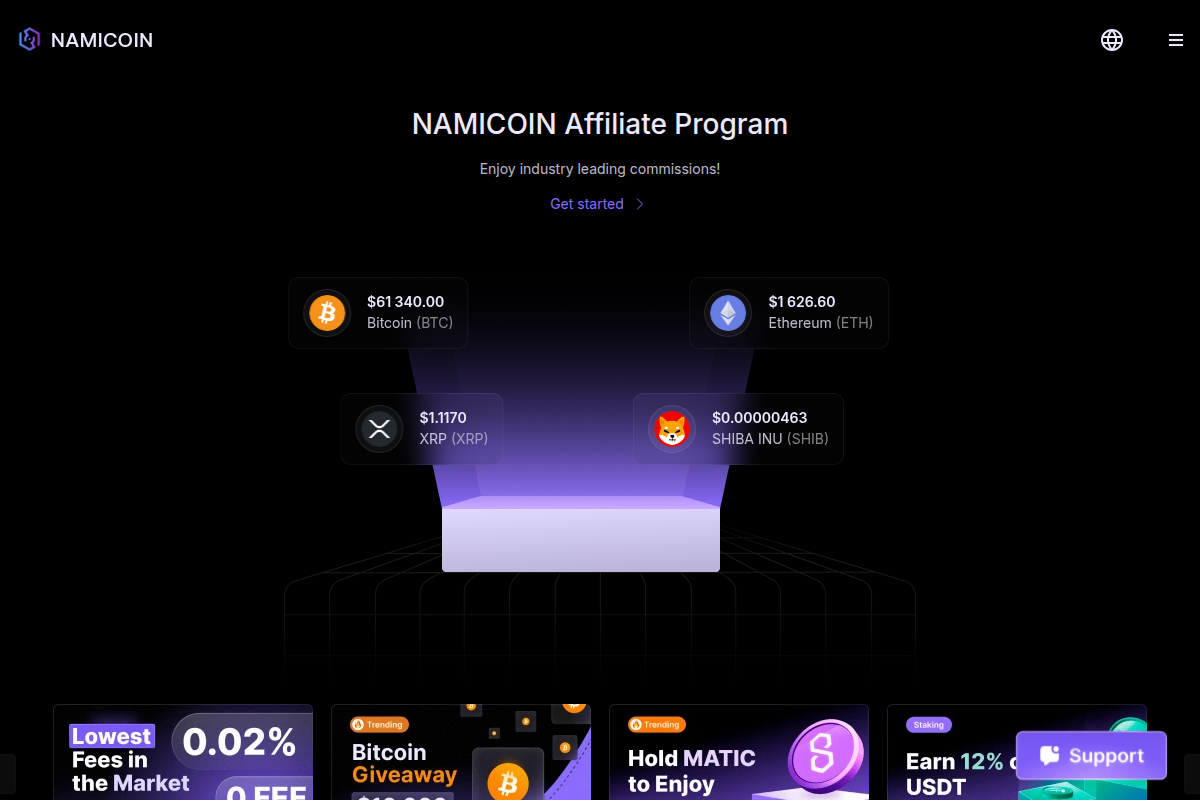
At first glance, Namicoin.com presents itself as a modern, high-tech cryptocurrency trading platform. It utilizes a design language common among legitimate exchanges like Binance or Coinbase, featuring real-time price charts, professional-looking marketing copy, and a streamlined interface. However, for an experienced cyber-security analyst, the surface-level aesthetics are secondary to the underlying technical indicators.
One of the most significant red flags discovered during our technical audit is the domain registration data. Legitimate financial institutions typically register their domains for multiple years and provide transparent ownership information. In contrast, Namicoin.com exhibits characteristics typical of “disposable” scam sites. The domain was registered very recently, and the registrant information is hidden behind a privacy proxy service. While privacy is a right for individuals, it is a massive red flag for a financial institution that claims to handle millions of dollars in client assets. Short-term domain registrations are a hallmark of fraudulent operations, as it allows the perpetrators to vanish and relaunch under a new name once the heat from law enforcement becomes too intense.
Furthermore, an analysis of the site’s server infrastructure reveals that it is hosted on a network frequently associated with other low-trust websites. While the site does utilize an SSL certificate (indicated by the HTTPS prefix), this should not be mistaken for a seal of legitimacy. In the modern era, even the most basic phishing sites use SSL to encrypt data; it simply means the connection is secure, not that the business behind the connection is honest.
Operational Red Flags: Lack of Transparency and Regulation
In the world of finance, transparency is the cornerstone of trust. Legitimate exchanges are required to comply with Anti-Money Laundering (AML) and Know Your Customer (KYC) regulations in the jurisdictions where they operate. When analyzing Namicoin.com, there is a glaring absence of any verifiable regulatory information. There is no mention of a physical headquarters, no licensing information from financial authorities like the SEC (USA), FCA (UK), or CySEC (Cyprus), and no details regarding the executive leadership team.
A legitimate exchange will proudly display its corporate history and the profiles of its leadership team. Namicoin.com remains entirely anonymous. When a platform asks you to deposit your hard-earned Bitcoin or Ethereum but refuses to tell you who is managing the books, the risk of a “rug pull” or a total loss of funds is near 100 percent. The lack of a clear “About Us” page that contains verifiable corporate registrations is perhaps the most damning piece of evidence against the site’s legitimacy.
Suspicious Pricing and Impossible Promises
Another common tactic employed by Namicoin.com and similar fraudulent entities is the promise of “exclusive” access to low-priced assets or guaranteed high-yield investment programs (HYIPs). Many users are lured to the platform through social media groups, dating apps, or direct messages on Telegram and WhatsApp. These recruiters often claim that Namicoin.com has a “glitch” or a special insider rate that allows for arbitrage profits. These are classic psychological triggers used in Pig Butchering scams (Sha Zhu Pan), where victims are groomed over time to invest larger and larger sums of money before the platform eventually freezes their accounts.
The User Experience: A Cycle of Deception
The operational flow of Namicoin.com is designed to mimic a legitimate trading experience to keep the victim engaged for as long as possible. Based on our analysis of user reports and the platform’s internal logic, the scam typically follows a four-stage process:
- The Bait: A user is introduced to the site by a “friend” or “mentor” online. They are encouraged to make a small initial deposit to “see how easy it is.”
- The Illusion of Profit: The platform’s interface is manipulated to show massive gains. The user’s dashboard might show that a 1,000 dollar investment has grown to 5,000 dollars in a matter of days. This is fake data generated by the site’s backend to build confidence.
- The Upsell: Seeing the “profits,” the user is pressured to deposit more money to hit a certain VIP tier or to take advantage of a limited-time market event.
- The Trap: When the user attempts to withdraw their funds, the platform suddenly demands “taxes,” “security fees,” or “verification deposits.” No matter how many fees the user pays, the withdrawal is never processed, and the site eventually cuts off communication.
This cycle is a textbook example of advance-fee fraud embedded within a fake cryptocurrency exchange environment. There is no actual trading occurring on Namicoin.com; it is merely a sophisticated graphical interface for a digital ledger controlled by scammers.
User Reviews and Community Sentiment
When performing a safety check on any platform, it is essential to look beyond the testimonials hosted on the site itself. The reviews featured on Namicoin.com are almost certainly fabricated, featuring stock photos and generic praise. However, a search of independent forums like Reddit, Trustpilot, and various scam-reporting databases tells a very different story.
Victims frequently report that their accounts were frozen immediately after they requested a withdrawal. Others mention that the “customer support” team becomes aggressive or unresponsive once a large deposit has been made. The common thread among all negative reviews is the inability to retrieve funds. In the world of cyber-security, if a platform allows you to put money in but prevents you from taking it out, it is not an exchange; it is a digital black hole.
Comparison with Legitimate Exchanges
To provide a clear perspective, let us compare Namicoin.com with a legitimate entity. A real exchange like Kraken or Coinbase has a multi-year history, transparent office locations, thousands of employees, and is registered with financial regulators. They have clear terms of service and do not solicit users via unsolicited private messages on social media. Namicoin.com fails every single one of these benchmarks. It lacks the institutional weight and the legal accountability required to be considered a safe harbor for investment.
The Final Verdict: Is Namicoin.com a Scam?
After a thorough investigation of the technical infrastructure, business practices, and user feedback, the conclusion is definitive. Namicoin.com is a fraudulent website and a highly dangerous scam. It exhibits all the classic markers of a cryptocurrency investment fraud, including:
- Recent and Private Domain Registration: Designed to hide the identity of the operators and facilitate a quick exit.
- Lack of Regulatory Oversight: The platform is not registered with any global financial authority, meaning there is no recourse for victims.
- Anonymity: No physical address, no verifiable team, and no corporate transparency.
- Deceptive Withdrawal Practices: Using fake “tax” requirements to extort more money from victims during the withdrawal process.
- Social Engineering: Reliance on high-pressure sales tactics and “Pig Butchering” grooming techniques.
Investors are strongly advised to avoid Namicoin.com at all costs. If you have already deposited funds into this platform, do not send any additional money for “taxes” or “fees.” Doing so will only increase your losses. Instead, document all communications, save transaction hashes, and report the incident to your local cyber-crime division and financial regulatory bodies.
In the high-stakes world of cryptocurrency, the best defense against fraud is due diligence. If an investment opportunity looks too good to be true, and the platform behind it refuses to provide proof of regulation or identity, it is almost certainly a scam. Protect your digital assets by sticking to well-known, regulated exchanges and remaining skeptical of unsolicited financial advice from strangers on the internet.
Safety Warning: Namicoin.com is part of a growing trend of “clone” exchanges. Even if this specific domain is taken down, the same scammers will likely reappear under a slightly different name. Always check for a valid license and a long-standing reputation before committing your capital to any digital platform.
Leave a Reply