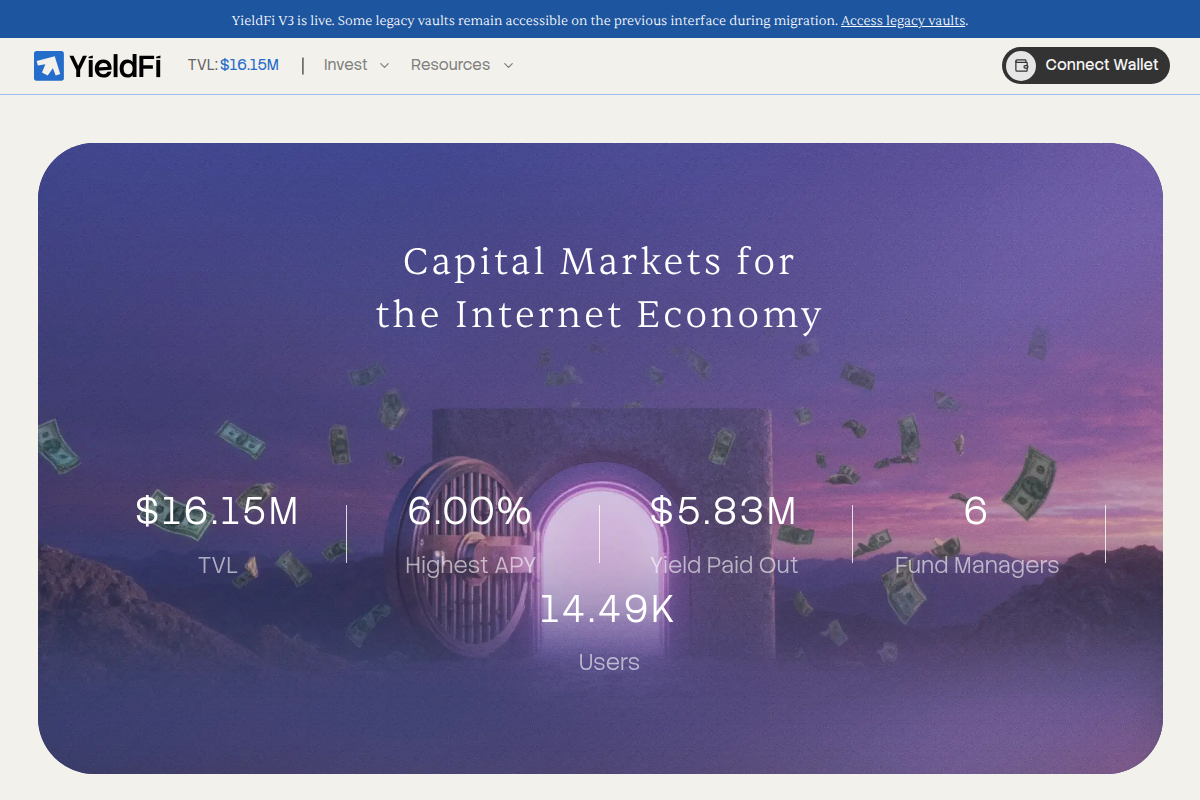
Is Yield.fi Legit? A Comprehensive Review of Yield App and the Recent Collapse
In the rapidly evolving world of decentralized finance, or DeFi, the promise of high annual percentage yields often masks underlying structural vulnerabilities. One platform that garnered significant attention in this space is Yield.fi, the digital home of Yield App. For several years, it positioned itself as a bridge between traditional finance and the crypto ecosystem, offering users a seamless way to earn interest on their digital assets. However, recent developments have shifted the conversation from growth and innovation to a more pressing question: Is Yield.fi a scam or legit?
Recover Your Funds From Bitcoin, Forex, Binary, and Crypto Brokers. We Specialize in Cases Over $5000. Their experts are ready to help with tracing your lost funds and guide you toward recovery
This article provides an in-depth cyber-security and SEO-driven analysis of Yield.fi. We will explore its operational history, the technical red flags that emerged, and the catastrophic events of 2024 that led to the platform suspending all operations. Whether you are a current user seeking answers or a prospective investor researching the safety of yield-generating platforms, this comprehensive review aims to provide clarity through an objective, data-driven lens.
The Rise and Operations of Yield App
Yield.fi was launched with the mission of making DeFi accessible to everyone. Unlike complex liquidity pools or yield farming protocols that require manual management, Yield App functioned as a managed service. Users would deposit assets like Bitcoin, Ethereum, and various stablecoins into their Yield.fi accounts. The platform then deployed these assets across various DeFi strategies to generate returns, a portion of which was passed back to the users.
At its peak, Yield.fi boasted thousands of users and hundreds of millions of dollars in total value locked. The platform was registered in the British Virgin Islands and held several licenses intended to provide a veneer of regulatory compliance. To the average retail investor, the professional design, active social media presence, and regular transparency reports made Yield.fi appear as a legitimate investment vehicle. However, the inherent risks of crypto custody and the lack of traditional insurance mechanisms remained a constant shadow over the operation.
Technical and Operational Red Flags
In the world of cyber-security and financial auditing, certain patterns serve as early warning signs for investors. Despite its professional appearance, Yield.fi exhibited several red flags that, in hindsight, suggested a fragile foundation.
- Lack of On-Chain Transparency: While the platform claimed to use decentralized protocols, the actual movement of user funds was largely centralized and opaque. Users had to trust the platform’s internal accounting rather than being able to verify assets on the blockchain in real-time.
- Regulatory Jurisdiction: Operating out of the British Virgin Islands is a common tactic for crypto firms seeking to avoid the stringent oversight of the SEC or European financial regulators. While not illegal, it limits the legal recourse available to investors if things go wrong.
- Yield Sustainability: Offering double-digit returns on stablecoins during market downturns is often a sign of high-risk lending or capital recycling. When market conditions shifted, the gap between promised yields and actual earnings became a structural liability.
- Sudden Communication Shifts: In the months leading up to its suspension, the frequency of detailed technical updates decreased, replaced by marketing-heavy content that focused on recruitment rather than risk management.
The June 2024 Collapse: A Turning Point
The defining moment for the legitimacy of Yield.fi occurred on June 28, 2024. In a move that shocked the crypto community, Yield App announced an immediate suspension of all activities on its platform. This included the freezing of all withdrawals, swaps, and reward distributions. The primary reason cited was the platform’s exposure to FTX, the infamous exchange that collapsed in late 2022.
This revelation raised a massive red flag regarding the platform’s transparency. If the exposure to FTX occurred in 2022, why did it take nearly two years for the platform to reach a breaking point? Cyber-security analysts and financial investigators point to this delay as evidence of potential mismanagement or an attempt to “trade out” of a hole using new deposits—a characteristic often associated with Ponzi-like schemes.
The suspension was followed by the announcement that the company had entered into a liquidation process in the British Virgin Islands. For many users, this was the final confirmation that Yield.fi had transitioned from a high-risk investment platform to a failed entity where capital recovery is highly unlikely.
User Reviews and Community Sentiment
The digital footprint of Yield.fi shifted overnight following the withdrawal freeze. Prior to June 2024, reviews on platforms like Trustpilot and Reddit were polarized. Some users praised the ease of use and consistent payouts, while more skeptical members of the community questioned the long-term viability of the business model.
Post-collapse, the sentiment has turned overwhelmingly negative. Common complaints among the community include:
- Loss of Access: Thousands of users report being unable to access their life savings, with no clear timeline for when, or if, the liquidation process will return any funds.
- Lack of Support: Customer service channels, which were once responsive, have largely gone silent or provide automated responses referring users to the liquidators.
- Allegations of Deception: Many investors feel they were misled by the platform’s previous claims of having limited exposure to the 2022 market contagion.
This massive shift in user sentiment is a hallmark of platforms that fail to manage risk effectively. While some stop short of calling it an intentional scam, the result for the end-user remains the same: a total loss of liquidity and asset control.
Cyber-Security Perspective on Website Safety
From a purely technical cyber-security standpoint, the Yield.fi website itself maintained high standards of encryption. It utilized valid SSL/TLS certificates and implemented two-factor authentication for user logins. However, in the context of financial platforms, technical security is separate from financial security.
A website can be secure from hackers while the underlying business model is insolvent. The primary “security” failure of Yield.fi was not a data breach, but a failure of custodial security. When a platform holds your private keys, the security of your funds depends entirely on the integrity and solvency of that centralized entity. The Yield.fi case serves as a stark reminder of the crypto adage: “Not your keys, not your coins.”
Final Verdict: Is Yield.fi a Scam or Legit?
Labeling Yield.fi as a “scam” requires a nuanced understanding of the situation. In its early years, Yield App functioned as a legitimate, albeit high-risk, financial service. It had real employees, registered entities, and a functioning product. However, its trajectory toward the end of its life cycle aligns with many predatory financial patterns.
Is Yield.fi a scam? In its current state, Yield.fi is an insolvent platform that has permanently frozen user funds. The lack of transparency regarding its FTX exposure and the sudden cessation of operations have led many experts to categorize it as a “soft rug pull” or a catastrophic failure of fiduciary duty. While the liquidation process is “legal,” the chances of retail investors being made whole are statistically slim.
Our Final Verdict: We categorize Yield.fi as High Risk / Failed. Investors should avoid any mirrors of the site or third-party services claiming they can “recover” funds from Yield.fi for a fee, as these are often secondary scams targeting the original victims.
How to Protect Yourself in the Future
The collapse of Yield.fi provides several lessons for the modern crypto investor. To avoid falling victim to similar situations, consider the following safety checks:
- Prioritize Self-Custody: Whenever possible, use hardware wallets to keep control of your private keys.
- Verify Transparency: Look for platforms that offer real-time, on-chain Proof of Reserves (PoR) rather than quarterly PDF reports.
- Analyze the Yield: If a platform offers yields significantly higher than the market average without a clear explanation of how that value is generated, exercise extreme caution.
- Check Regulatory Standing: A license in a tier-1 jurisdiction (like the US, UK, or EU) provides much more protection than a registration in an offshore tax haven.
The story of Yield.fi is a cautionary tale of the dangers inherent in centralized yield platforms. While the promise of passive income is alluring, the risk of total capital loss is a reality that every participant in the DeFi space must weigh heavily.
Leave a Reply