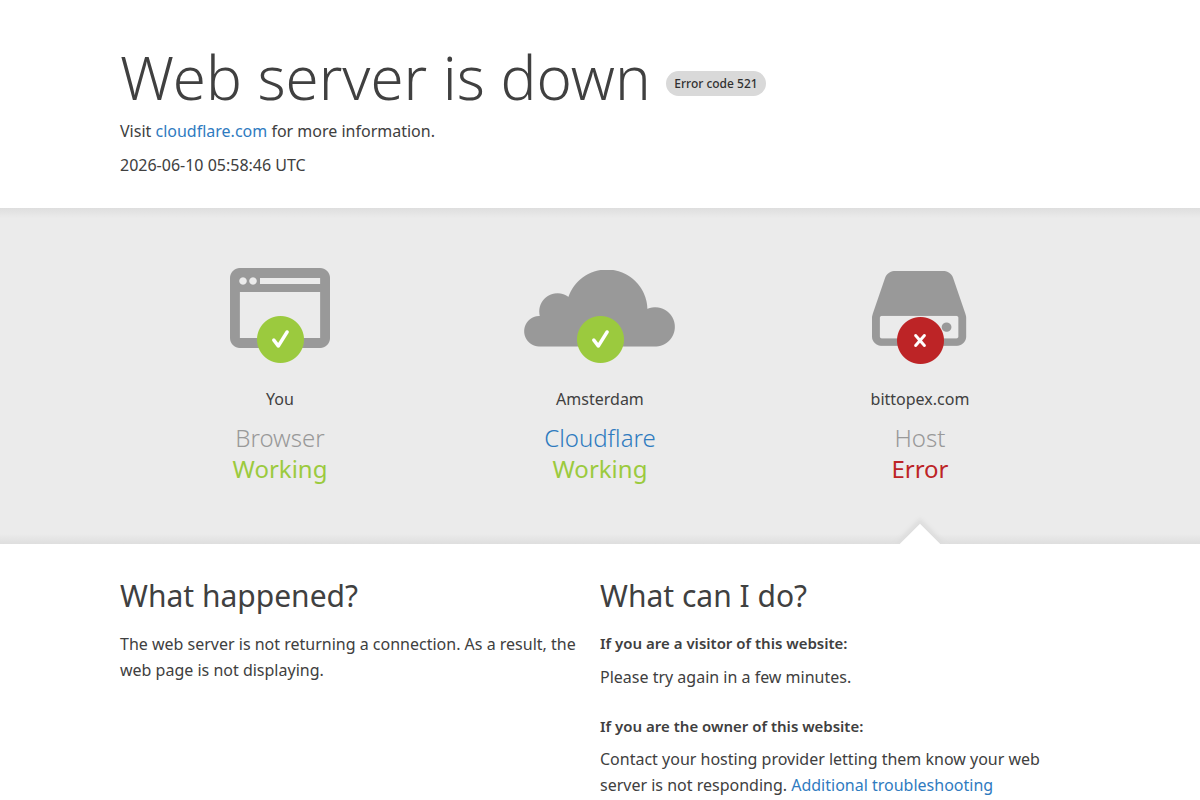
Bittopex.com Review: Investigating the Legitimacy of This Crypto Platform
The digital asset market has seen an unprecedented surge in interest over the last decade, leading to the emergence of countless cryptocurrency exchanges. While some of these platforms have become pillars of the financial industry, others have emerged as sophisticated traps for unsuspecting investors. One such platform that has recently drawn significant attention is Bittopex.com. This article provides a comprehensive cybersecurity analysis and SEO-focused review to answer the critical question: Is Bittopex.com a legitimate exchange or a well-disguised scam?
Recover Your Funds From Bitcoin, Forex, Binary, and Crypto Brokers. We Specialize in Cases Over $5000. Their experts are ready to help with tracing your lost funds and guide you toward recovery
In the world of online trading, security and transparency are the cornerstones of trust. When evaluating a platform like Bittopex.com, it is essential to look beyond the sleek interface and high-yield promises. Our investigation focuses on technical infrastructure, regulatory compliance, domain history, and user feedback to provide a definitive verdict on the safety of your capital.
The Architecture of Bittopex.com: Technical Red Flags
A primary step in any cybersecurity audit is examining the technical foundation of the website. Bittopex.com utilizes a template-based design that is frequently observed in the “Exchange-as-a-Service” kits sold on the dark web or specialized forums. These templates allow scammers to launch a professional-looking trading platform in minutes with minimal investment. While a clean design is not a crime, the lack of original branding and the presence of generic, unedited text blocks across the site are major indicators of a low-effort operation.
Regarding security protocols, Bittopex.com does employ an SSL certificate. However, a common misconception among retail investors is that an SSL certificate equates to legitimacy. An SSL certificate simply ensures that the data transmitted between your browser and the server is encrypted. It does not verify the identity or the intentions of the entity behind the server. Most modern phishing sites use free SSL certificates from providers like Let is Encrypt to create a false sense of security.
Furthermore, an analysis of the domain registration data reveals troubling patterns. Scam platforms often use privacy protection services to hide the identities of their owners. While privacy is a right, a legitimate financial institution typically provides a verifiable corporate address and registration details. Bittopex.com lacks transparency regarding its physical headquarters and its executive leadership team, which is a classic red flag in the cryptocurrency sector.
Regulatory Status and Legal Compliance
Any platform offering financial services, especially those involving the exchange of fiat currency for digital assets, must adhere to strict regulatory guidelines. In the United States, this involves registering as a Money Services Business (MSB) with FinCEN and complying with Anti-Money Laundering (AML) and Know Your Customer (KYC) regulations. Internationally, reputable exchanges seek licenses from bodies like the FCA in the UK or CySEC in Cyprus.
Our research indicates that Bittopex.com does not possess any valid licenses from recognized financial authorities. There is no evidence of registration with FinCEN, nor does the site provide a verifiable license number for any jurisdiction. Operating without these licenses means that there is no oversight of the platform’s internal operations. If the platform decides to freeze your assets or shut down entirely, you have zero legal recourse through standard financial regulatory channels. This lack of accountability is the hallmark of a fraudulent operation.
The Withdrawal Trap: A Common Scam Mechanism
The most frequent complaint associated with Bittopex.com involves the inability to withdraw funds. This is a common tactic in “pig butchering” or “liquidity” scams. The process typically follows a predictable pattern:
- Initial Success: The user is encouraged to make a small deposit and is shown “fictional” gains on the platform dashboard to build confidence.
- The Upsell: Based on these fake profits, the user is pressured by “account managers” or individuals met on social media to deposit larger sums of money.
- The Withdrawal Block: When the user attempts to withdraw their balance, the platform suddenly demands a “tax payment,” “verification fee,” or “security deposit” to release the funds.
- Total Loss: Even after these additional fees are paid, the funds are never released, and the platform eventually stops responding to communication.
It is crucial to remember that legitimate exchanges like Coinbase, Binance, or Kraken never require a separate “tax” payment sent to a private wallet address before allowing a withdrawal. Any platform that asks for more money to let you access your existing balance is almost certainly a scam.
Analyzing User Reviews and Online Reputation
Online reputation management is a battleground for scam websites. To counter negative reviews, many fraudulent platforms generate fake positive testimonials on third-party review sites. When looking at Bittopex.com, we see a stark contrast between highly polished, generic five-star reviews and detailed, desperate one-star reviews from users claiming they have been defrauded.
Search engine queries for “Bittopex.com reviews” or “is Bittopex.com a scam” reveal a growing number of warnings on community forums like Reddit and specialized fraud-reporting sites. Users report being contacted through dating apps or Telegram by individuals who claim to have “inside information” or “special trading bots” that only work on Bittopex.com. This method of recruitment is a major red flag and is never used by legitimate financial institutions.
Content and Transparency Analysis
The written content on Bittopex.com provides further clues into its nature. The “About Us” and “Terms and Conditions” pages are often copied verbatim from other known scam sites. A simple search of specific phrases within their legal documents often yields dozens of other URLs with identical text, many of which have already been flagged as malicious and taken down by hosting providers.
Additionally, the contact information provided is often non-functional or leads to generic email addresses (e.g., Gmail or ProtonMail) rather than a professional corporate domain. There is typically no phone support or physical office location that can be verified through independent mapping services. A legitimate company handling millions of dollars in transactions would have a robust infrastructure for customer support and a verifiable corporate presence.
Identifying Red Flags: A Summary
To help investors stay safe, we have summarized the critical red flags identified during our analysis of Bittopex.com:
- Anonymity: Total lack of information regarding the company owners, developers, or physical location.
- Unregulated Status: No registration with FinCEN, FCA, or any other global financial regulator.
- Suspicious Recruitment: Use of social engineering, dating apps, and unsolicited Telegram messages to attract users.
- Withdrawal Barriers: Demands for “taxes” or “fees” before withdrawals can be processed.
- Template Design: High similarity to known scam exchange templates with generic or plagiarized content.
- Domain Age: A very recent registration date which contradicts claims of being a long-standing, established platform.
Final Verdict: Is Bittopex.com a Scam or Legit?
Based on our comprehensive cybersecurity analysis and the overwhelming evidence of fraudulent patterns, our verdict is that Bittopex.com is a highly dangerous scam. It exhibits all the classic characteristics of a fraudulent cryptocurrency exchange designed to misappropriate user funds through social engineering and technical deception.
The platform lacks the necessary regulatory licenses, provides no transparency regarding its operations, and employs predatory tactics to prevent users from withdrawing their capital. The “profits” shown on the platform dashboard are likely simulated and do not represent real-world assets. If you have already deposited funds into Bittopex.com, you should immediately cease all communication with their representatives and refrain from sending any additional money for “taxes” or “fees.”
For those looking to invest in cryptocurrency, we strongly recommend sticking to well-known, regulated exchanges with a proven track record of security and transparency. Always conduct thorough due diligence before entrusting your digital assets to any platform. Remember: if a trading opportunity seems too good to be true, it almost certainly is.
Protecting your financial future in the digital age requires constant vigilance. Websites like Bittopex.com are part of a growing ecosystem of online fraud that preys on the complexity of blockchain technology. By recognizing the red flags outlined in this article, you can better navigate the crypto landscape and keep your investments safe from sophisticated bad actors.
Leave a Reply