Clore.ai Review | Is Clore Legit or Scam? GPU Marketplace & Crypto Mining Explained

Understanding the Legitimacy of Clore.ai: A Comprehensive Review

In the rapidly evolving landscape of artificial intelligence and blockchain technology, decentralized physical infrastructure networks, or DePIN, have emerged as a significant trend. Among the prominent players in this sector is Clore.ai, a platform that claims to provide a marketplace for high-performance GPU computing power. As with any platform involving cryptocurrency, hardware leasing, and financial transactions, the primary question on the minds of potential users and investors is: Is Clore.ai a scam or a legitimate service? This article provides a deep-dive analysis into the technical, operational, and reputational aspects of the platform to provide a definitive verdict.

Recover Your Funds From Bitcoin, Forex, Binary, and Crypto Brokers. We Specialize in Cases Over $5000. Their experts are ready to help with tracing your lost funds and guide you toward recovery

What is Clore.ai?

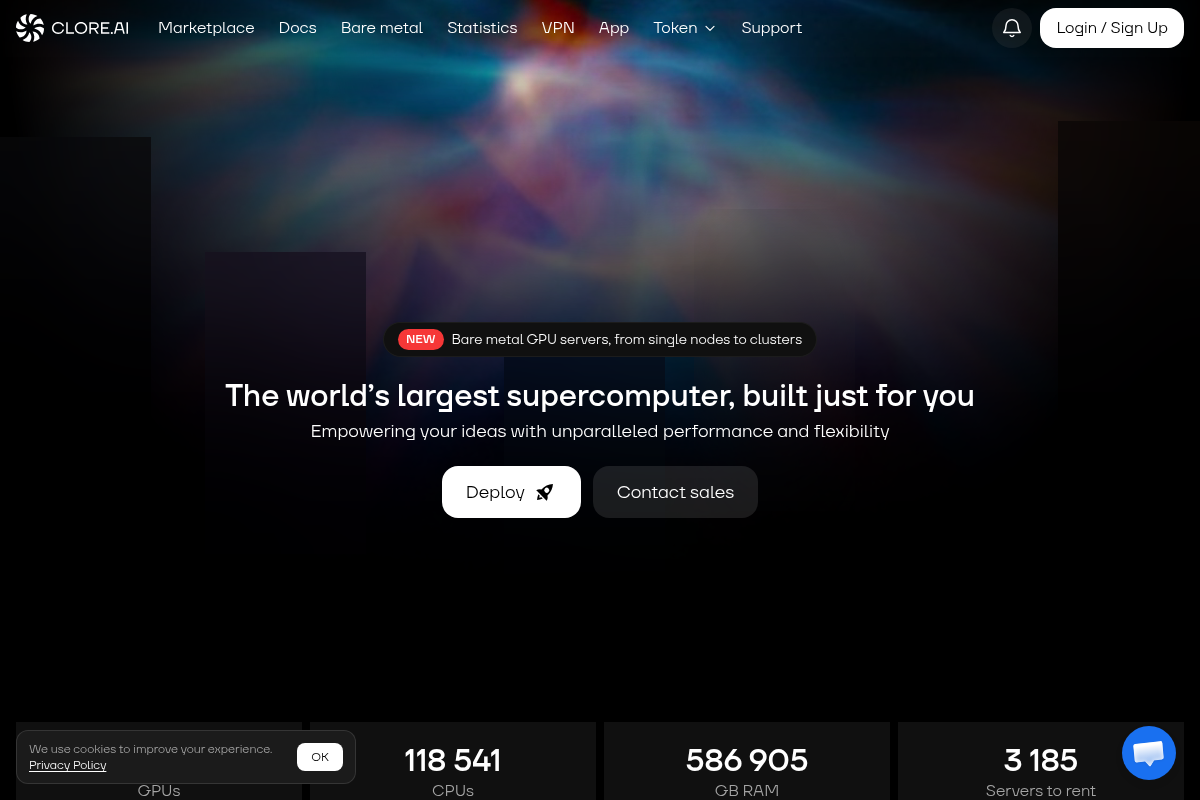
Clore.ai operates as a decentralized marketplace where individuals can either rent out their GPU (Graphics Processing Unit) power or lease computing resources from others. The primary use cases for these resources include artificial intelligence training, video rendering, and cryptocurrency mining. By bypassing traditional centralized cloud providers like Amazon Web Services (AWS) or Google Cloud, Clore.ai aims to offer significantly lower prices while rewarding hardware owners with its native utility token, CLORE.

The platform is built on its own blockchain, which uses a Proof of Work (PoW) consensus mechanism. It introduces a unique concept called Proof of Holding, which incentivizes users to hold their CLORE tokens in their wallets to receive increased rewards from their hosting activities. This economic model is designed to stabilize the token ecosystem while providing a tangible service to the global tech community.

Red Flags and Security Analysis

When evaluating the legitimacy of a tech-oriented platform, cybersecurity analysts look for specific red flags that characterize fraudulent operations. Below is an analysis of Clore.ai against these standard security benchmarks.

Website Design and Technical Infrastructure

A common sign of a scam is a poorly constructed website with broken links, grammatical errors, and a lack of technical depth. Clore.ai presents a highly professional interface with a sophisticated dashboard for both renters and hosters. The platform provides a custom operating system, Clore OS, which is a specialized Linux-based distribution designed to manage hardware performance and security. This level of technical development is rarely seen in “rug pull” or “exit scam” projects, which typically rely on templated websites.

From a security perspective, the website employs standard SSL (Secure Sockets Layer) encryption, ensuring that data transmitted between the user and the server is encrypted. The domain was registered in late 2022, providing it with a operational history that exceeds the typical lifespan of short-term fraudulent sites.

Transparency and Contact Information

Scam websites often hide the identities of their founders and provide no way to contact support. Clore.ai maintains a transparent presence. The project has a comprehensive GitHub repository where their code is open to public inspection. This transparency is a hallmark of legitimate blockchain projects. Furthermore, the team is active on social media platforms and maintains a robust community on Discord and Telegram. While the full personal identities of every developer may not be featured on the front page, the project’s consistent updates and public-facing development roadmap suggest a long-term commitment rather than a deceptive front.

Pricing and Market Logic

If something sounds too good to be true, it often is. However, the pricing on Clore.ai follows a logical market-driven model. The rates for renting GPUs are significantly lower than those of AWS or Azure because the overhead costs are borne by individual hosts rather than a multi-billion dollar corporation. The rewards for hosts are paid in CLORE tokens, which are subject to market volatility. This risk-reward profile is consistent with the current state of the decentralized computing market and does not exhibit the “guaranteed high returns” typically promised by Ponzi schemes.

Analysis of the CLORE Token Ecosystem

The legitimacy of Clore.ai is intrinsically linked to the health of its native token. CLORE is listed on several reputable cryptocurrency exchanges, including MEXC, Gate.io, and Bitget. Listing on these platforms requires a degree of due diligence and compliance, which serves as an external layer of verification. The token has a transparent circulating supply and market capitalization data available on major tracking sites like CoinMarketCap and CoinGecko.

The Proof of Holding mechanism is particularly interesting from an analytical standpoint. It requires users to link their wallet to their hosting account. Importantly, the platform does not require users to “lock” their tokens in a smart contract that they do not control; they simply need to hold them in their private address. This mitigates the risk of the platform “locking and stealing” user funds, a common tactic used by fraudulent decentralized finance (DeFi) platforms.

User Reviews and Community Sentiment Summary

To provide an objective verdict, we must look at the experiences of the actual user base. Analysis of community forums such as Reddit and Bitcointalk reveals a generally positive sentiment, albeit with the technical hurdles expected of a complex hardware-sharing platform.

  • Positive Feedback: Many users report successful payouts in CLORE tokens for hosting their rigs. Renters frequently praise the platform for the availability of high-end NVIDIA RTX cards at a fraction of the cost of traditional providers.
  • Negative Feedback: Most complaints center around technical difficulties, such as setting up the Clore OS on specific hardware configurations or occasional connectivity issues with rented nodes. These are operational challenges rather than evidence of a scam.
  • Security Concerns: Some users have expressed concerns about the security of their hardware when allowing remote access. Clore.ai addresses this by utilizing virtualization and isolation techniques, but as with any peer-to-peer computing service, a baseline level of risk exists for the host.

Operational Transparency: The Clore.ai Blockchain

Unlike many “scam” tokens that exist merely as a contract on the Ethereum or Binance Smart Chain, Clore.ai operates its own layer-1 blockchain. This requires significant engineering effort and ongoing maintenance. The blockchain explorer allows anyone to verify transactions, block rewards, and the total hashrate of the network. The presence of a dedicated blockchain with a consistent block-time history is strong evidence of a legitimate technical operation.

Furthermore, the project includes a Proof of Service (PoS) layer. This ensures that hosts are actually providing the hardware they claim to have. If a host fails to maintain the uptime or performance levels promised to a renter, they are penalized within the ecosystem. This automated accountability mechanism protects consumers and ensures the integrity of the marketplace.

Final Verdict: Is Clore.ai Legit?

Based on a comprehensive analysis of the technical infrastructure, market behavior, community feedback, and transparency of the development team, the verdict is that Clore.ai is a legitimate platform. It is not a scam. It represents a functional application of decentralized technology to solve real-world problems in the AI and rendering industries.

However, being “legit” does not mean the platform is without risk. Prospective users and investors should consider the following:

  • Market Volatility: The value of the CLORE token can fluctuate wildly. Hosting hardware may not always be profitable if the token price drops significantly or if electricity costs rise.
  • Technical Complexity: Setting up as a host requires a certain level of technical proficiency with Linux and hardware management.
  • Privacy Risks: When renting out a GPU, you are allowing remote tasks to run on your hardware. While isolated, hosts should always practice stringent network security.
  • Competition: The DePIN space is highly competitive, with projects like Akash Network and Nosana offering similar services. The long-term success of Clore.ai depends on its ability to maintain its technological edge and grow its user base.

In conclusion, Clore.ai passes the safety checks that cybersecurity analysts use to identify fraudulent sites. It has a valid SSL certificate, a professional and transparent development cycle, an active presence on major exchanges, and a functional product that delivers on its promises. It is a genuine participant in the decentralized computing economy, offering a viable alternative to traditional cloud giants for those looking to harness or provide GPU power.

Comments

Leave a Reply

Your email address will not be published. Required fields are marked *