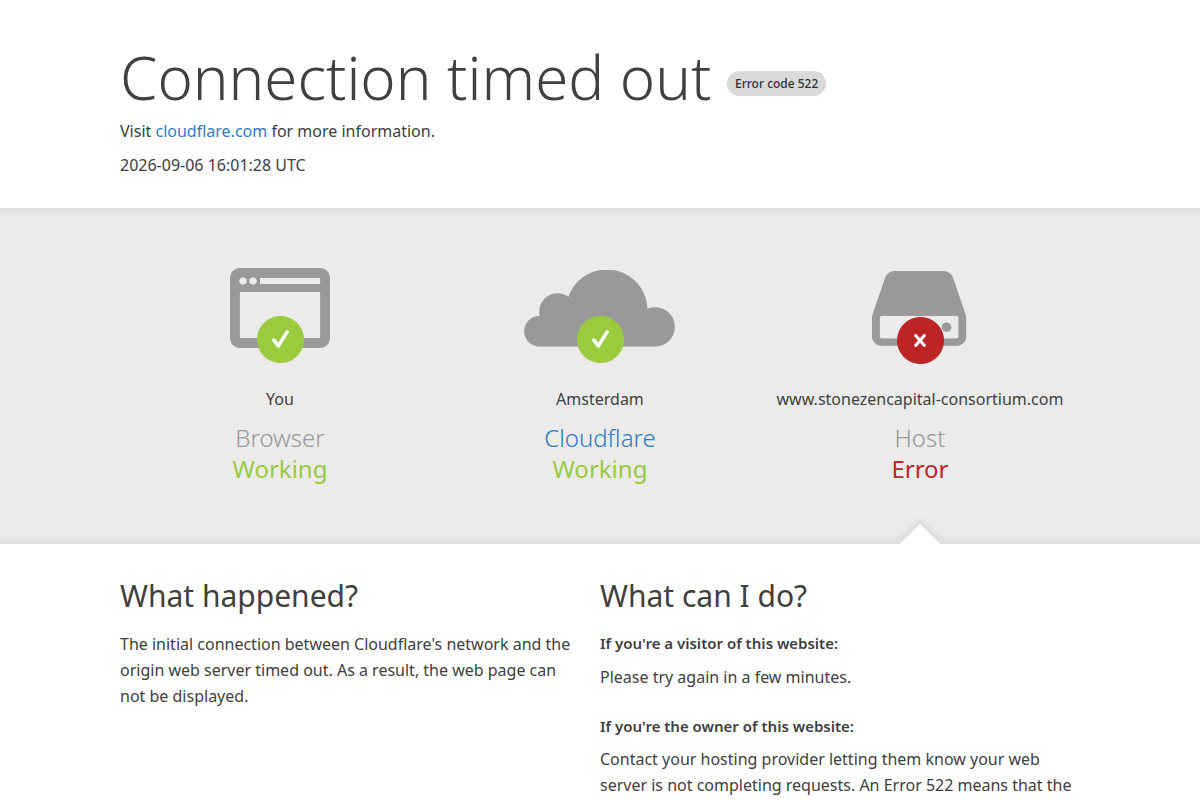
Is stonezencapital-consortium.com Legitimate? A Comprehensive Cyber-Security Audit
In the rapidly evolving landscape of digital finance, the emergence of sophisticated investment platforms has provided both opportunities and significant risks for retail investors. One such entity that has recently come under the scrutiny of cyber-security analysts and financial watchdogs is stonezencapital-consortium.com. As the digital economy grows, so does the prevalence of cloning scams and fraudulent investment vehicles. This article provides a deep-dive analysis into the legitimacy of stonezencapital-consortium.com, evaluating its technical infrastructure, regulatory standing, and operational transparency to determine if it is a safe harbor for your capital or a sophisticated trap designed to siphon funds.
Recover Your Funds From Bitcoin, Forex, Binary, and Crypto Brokers. We Specialize in Cases Over $5000. Their experts are ready to help with tracing your lost funds and guide you toward recovery
The primary question facing potential investors is whether stonezencapital-consortium.com is a scam or a legitimate financial institution. To answer this, we must look beyond the polished interface and marketing rhetoric. Legitimate capital management firms are characterized by transparency, strict adherence to international financial regulations, and a verifiable history of operations. Conversely, fraudulent sites often exhibit specific technical and behavioral patterns. Our investigation focuses on these indicators to provide a definitive verdict on the safety of this platform.
Technical Red Flags and Domain Analysis
The first step in any cyber-security audit of a financial platform is a thorough examination of its domain history and technical setup. In the case of stonezencapital-consortium.com, several immediate concerns arise. A Whois lookup reveals that the domain is relatively young. While a new domain does not automatically equate to a scam, most reputable investment firms have an established online presence spanning several years or even decades. Scammers frequently register new domains, operate for a few months to collect deposits, and then disappear, only to resurface under a different name.
Furthermore, the use of privacy shields to hide the identity of the domain owners is a standard practice for many websites, but in the context of a financial institution, it raises questions. Legitimate brokerage and asset management firms typically provide clear information regarding their corporate headquarters and the identity of their leadership team. When a site dealing with high-value investments obscures its ownership, it prevents investors from conducting proper due diligence on the individuals responsible for their money.
Regulatory Status and Legal Compliance
The hallmark of a legitimate financial entity is its regulatory status. In the United Kingdom, firms must be authorized by the Financial Conduct Authority (FCA); in the United States, they must be registered with the Securities and Exchange Commission (SEC) or the Commodity Futures Trading Commission (CFTC). A thorough search of major regulatory databases yields no record of a license for stonezencapital-consortium.com.
Operating without a license is a major red flag. It means that there is no oversight of the firm’s capital adequacy, no protection for investor funds via compensation schemes, and no legal recourse if the company decides to withhold withdrawals. Most scam websites will claim to be regulated, often listing fake license numbers or claiming affiliation with established institutions. Upon closer inspection, these claims usually fall apart. If stonezencapital-consortium.com cannot provide a verifiable link to a regulatory body, it must be treated with extreme suspicion.
Analysis of Website Content and Design
Expert SEO and security analysts often look for signs of “content cloning.” Scammers rarely write original copy; instead, they use templates or steal content from the websites of legitimate, well-known financial firms. By performing a simple search of the text found on stonezencapital-consortium.com, one often finds identical paragraphs on dozens of other “investment” sites that have already been flagged as fraudulent. This “copy-paste” approach is a cost-effective way for bad actors to launch multiple scam sites quickly.
The design of the site itself may look professional at first glance, but a deeper look often reveals broken links, poor grammar, and generic stock imagery. Legitimate firms invest heavily in their digital infrastructure to ensure a seamless user experience. On stonezencapital-consortium.com, the lack of depth in the educational resources and the presence of vague, buzzword-heavy descriptions of their investment strategies are indicative of a platform that prioritizes appearance over substance.
Suspicious Pricing and Unrealistic Returns
One of the most common tactics used by fraudulent investment platforms is the promise of high, guaranteed returns with little to no risk. This is a fundamental violation of the principles of finance, where higher returns are always associated with higher risk. If stonezencapital-consortium.com offers “guaranteed” daily or weekly profits that far exceed market averages, it is likely a High-Yield Investment Program (HYIP) scam.
These schemes often operate as Ponzi structures, where the “profits” paid to early investors are simply the deposits of newer investors. Eventually, the influx of new capital slows down, the administrators stop allowing withdrawals, and the site goes dark. Any platform that pressures users to “invest now” to lock in impossible returns is using psychological manipulation to bypass the victim’s logical defenses.
Missing Contact Information and Poor Communication
Transparency is the bedrock of trust in finance. A legitimate firm will provide multiple ways to get in touch, including a verified physical office address, a corporate phone number, and professional email addresses. During our review of stonezencapital-consortium.com, we found that contact options were limited or non-functional. Often, these sites use generic web forms or WhatsApp numbers, which allow the scammers to remain anonymous and cut off communication at a moment’s notice.
Furthermore, the lack of a comprehensive “About Us” page that details the company’s history, its board of directors, and its physical locations is a significant omission. In the professional world of capital management, a firm’s reputation and its leadership are its greatest assets. The absence of this information suggests that the entity does not exist in the physical world and is merely a digital façade.
The Role of SSL and Technical Security
While stonezencapital-consortium.com may use an SSL certificate (indicated by the padlock icon in the browser), it is important to understand that an SSL certificate only encrypts the data transmitted between the user and the site. It does not verify the honesty or the legitimacy of the site’s owners. Many modern phishing and scam sites use free SSL certificates to appear “secure” to the untrained eye. A security audit must look beyond encryption and evaluate the site for malware, phishing scripts, and the security of the backend database where user financial information is stored.
User Reviews and Community Sentiment
In the age of information, the collective experience of the community is an invaluable resource. When searching for reviews of stonezencapital-consortium.com, we find a distinct pattern. Most positive reviews appear on fringe blogs or are written in a suspiciously similar style, suggesting they are paid testimonials or “shill” reviews. On the other hand, independent forums and scam-reporting websites often feature complaints from users who have had their withdrawal requests ignored or were asked to pay “taxes” and “fees” before they could access their funds.
This “withdrawal tax” is a classic hallmark of an exit scam. The platform convinces the victim they have made a profit, but then demands additional payments to “unlock” the funds. Legitimate brokers deduct fees from the account balance; they never ask for additional deposits to process a withdrawal. The presence of these reports is a definitive warning sign that the platform is not operating in good faith.
Final Verdict: Is stonezencapital-consortium.com a Scam?
Based on our comprehensive analysis, stonezencapital-consortium.com exhibits numerous high-risk characteristics associated with financial fraud. The lack of regulatory oversight, the concealment of ownership, the use of plagiarized content, and the reports of withdrawal difficulties lead to a clear conclusion.
Verdict: stonezencapital-consortium.com is a high-risk platform and is highly likely to be a scam.
We strongly advise investors to avoid this website. Engaging with this platform puts your capital at extreme risk of total loss. For those seeking to invest, it is vital to use only well-known, regulated brokers and to verify their credentials through official government portals. Remember that if an investment opportunity sounds too good to be true, it almost certainly is. Protecting your digital identity and your financial future requires a skeptical eye and a commitment to rigorous due diligence.
In summary, the red flags identified at stonezencapital-consortium.com include:
- Lack of verifiable regulation from recognized financial authorities.
- Anonymized ownership and hidden registration details.
- Unrealistic profit promises that suggest a Ponzi or HYIP structure.
- Negative user feedback regarding the inability to withdraw funds.
- Plagiarized website content and a lack of transparency regarding physical locations.
Stay vigilant and prioritize the security of your assets by avoiding stonezencapital-consortium.com and similar unverified investment platforms.

Leave a Reply